
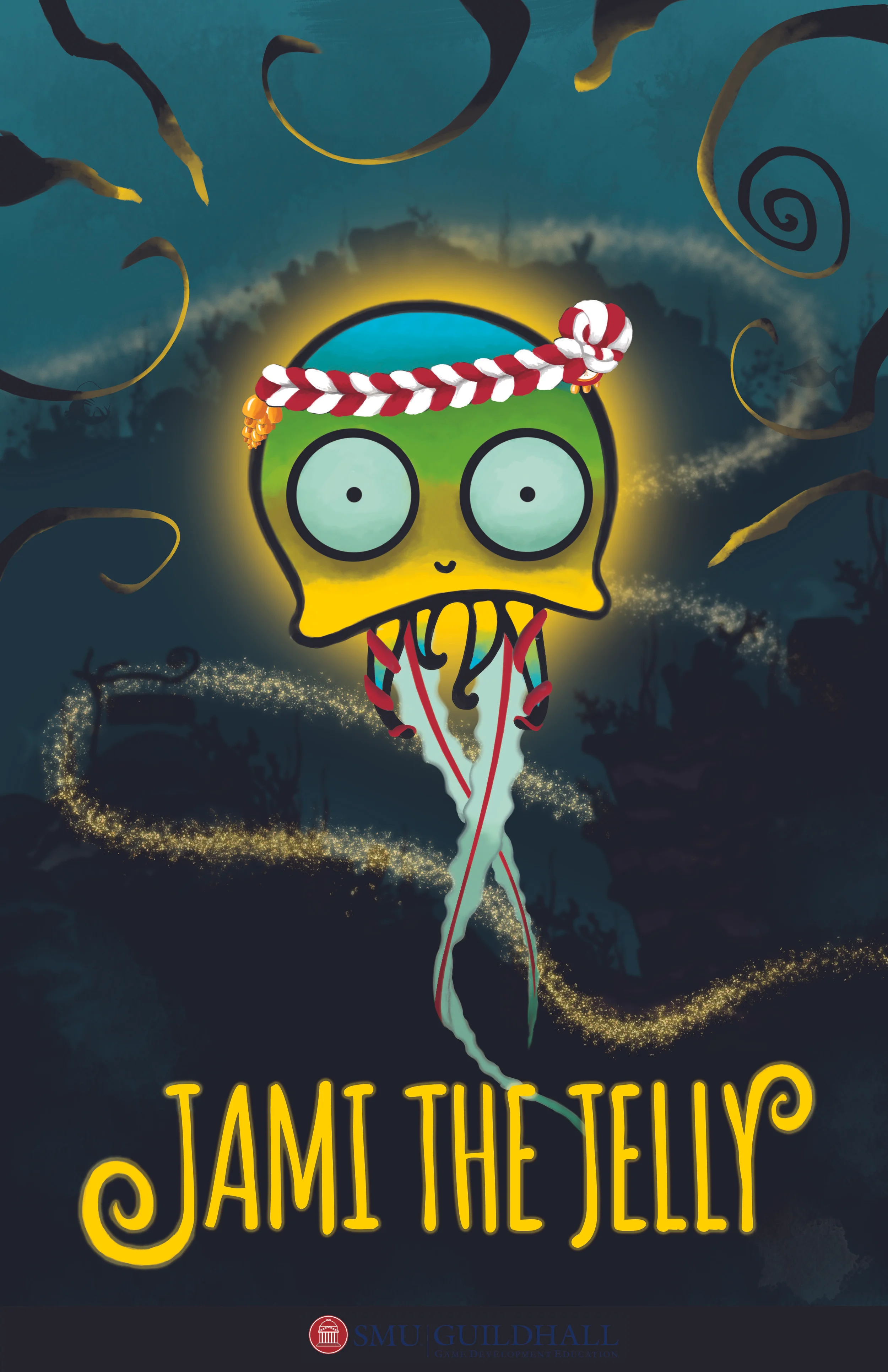
Jami the Jelly
Development Details
Engine: Unity 5
Genre: 2D Exploration
Platform: Android
Development Time: 3 months (October - December 2017)
Team Size: 5 developers
Team:
Design:
Aspen Clark
Nicholas E. Thomas
Art:
Claire Bian
Programming:
Neesarg Banglawala
Rakhil Soman
Synopsis
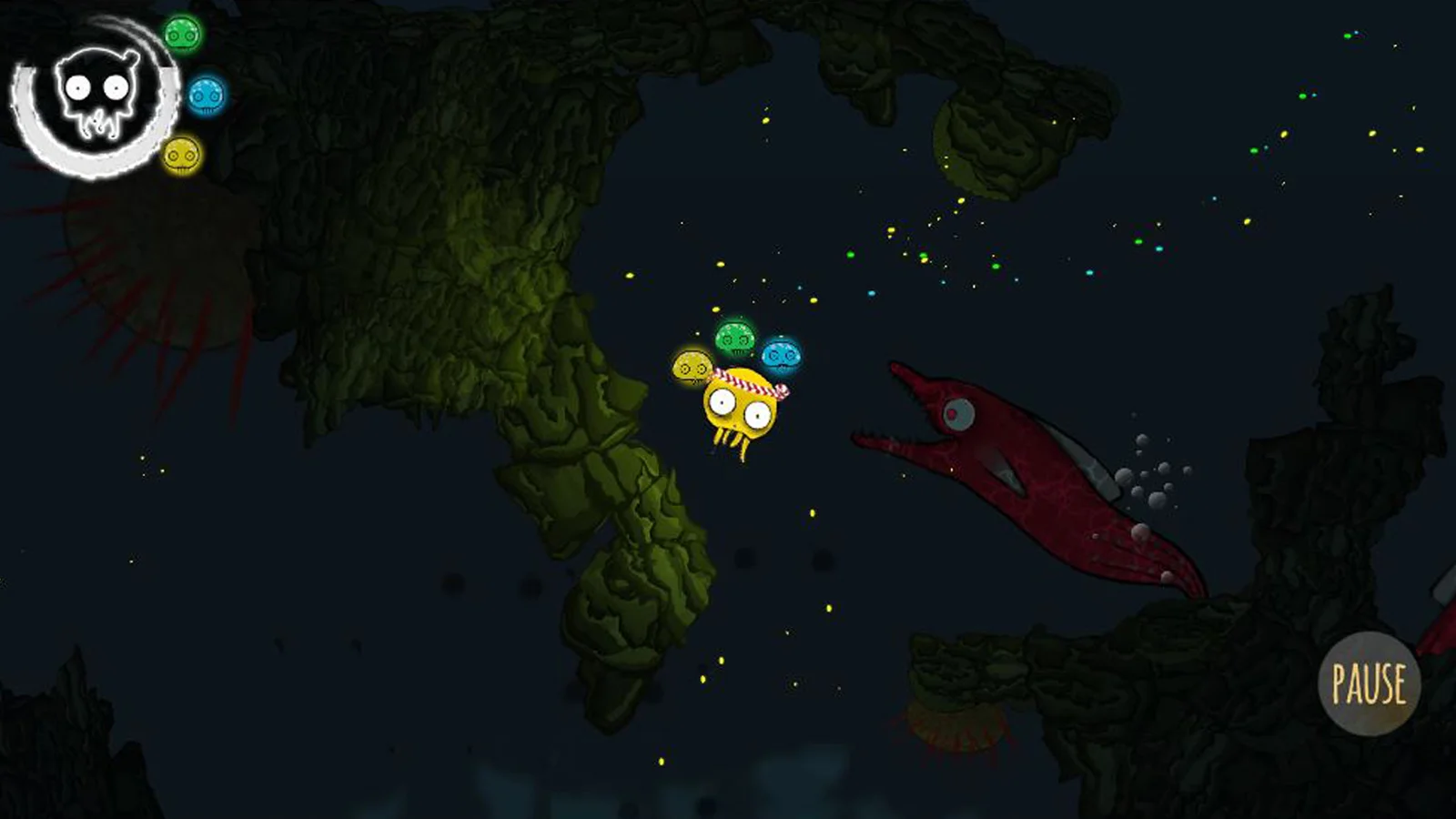
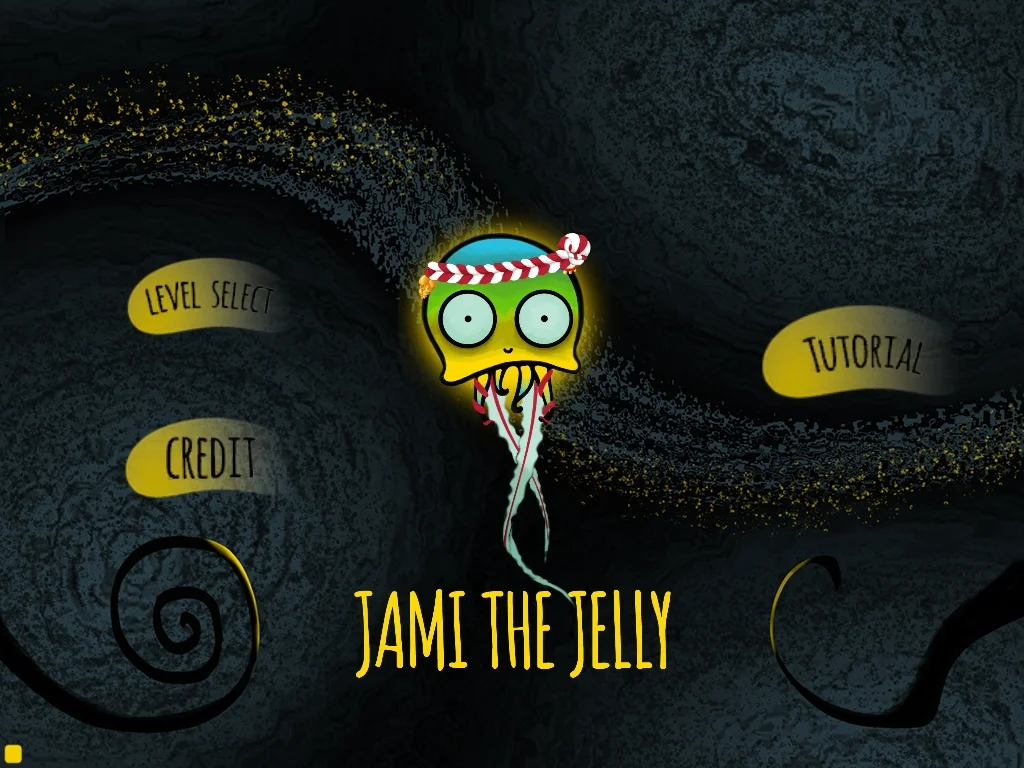
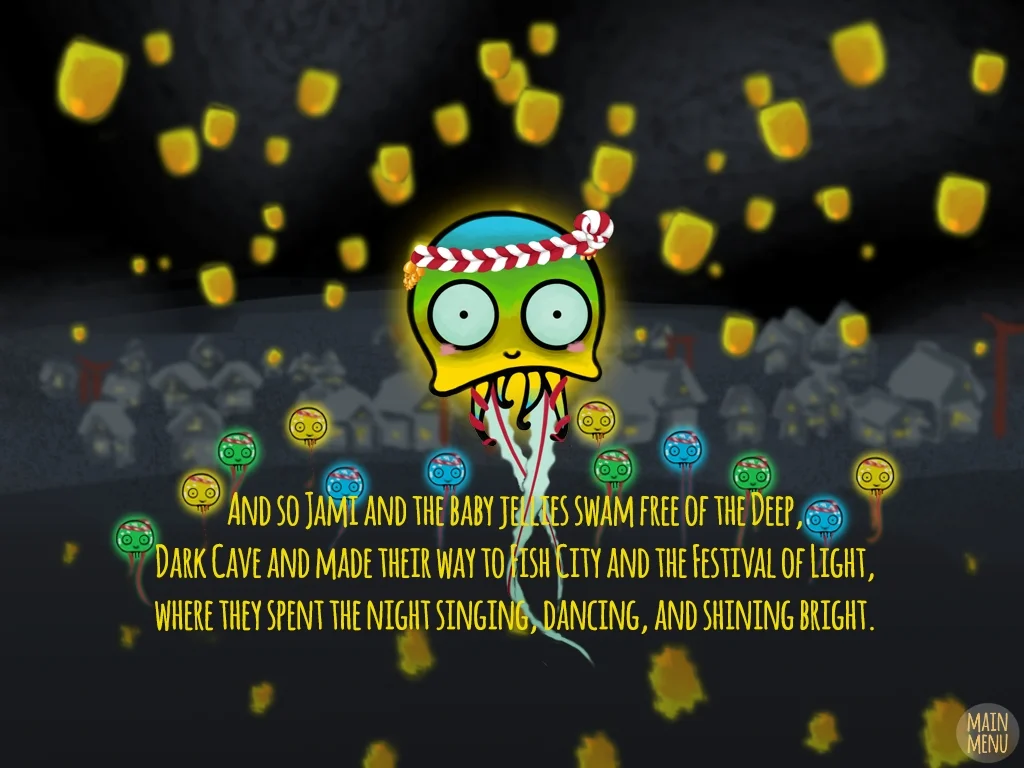
Jami the Jelly is a 2D exploration-based game. It follows the journey of Jami, a jellyfish searching through a series of maze-like underwater caverns to rescue his friends and lead them to a festival. Along the way, his journey is fraught with perils including a host of underwater monsters like Mr. Vegan, Mrs. Dandelion, and Mr. Molar.
Pillars
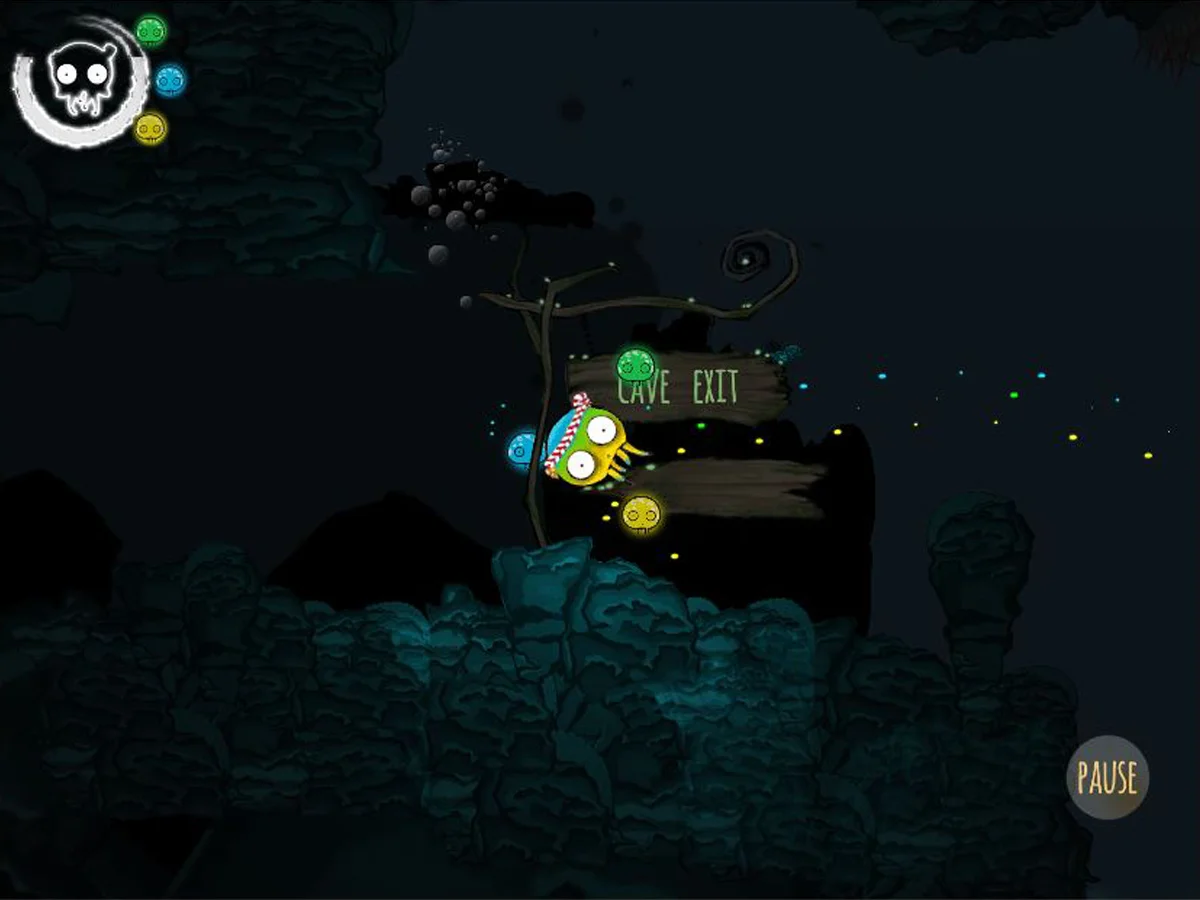
Pleasing Graphical Style
Simple Controls
Strong Conveyance
Emotional Engagement
My Roles
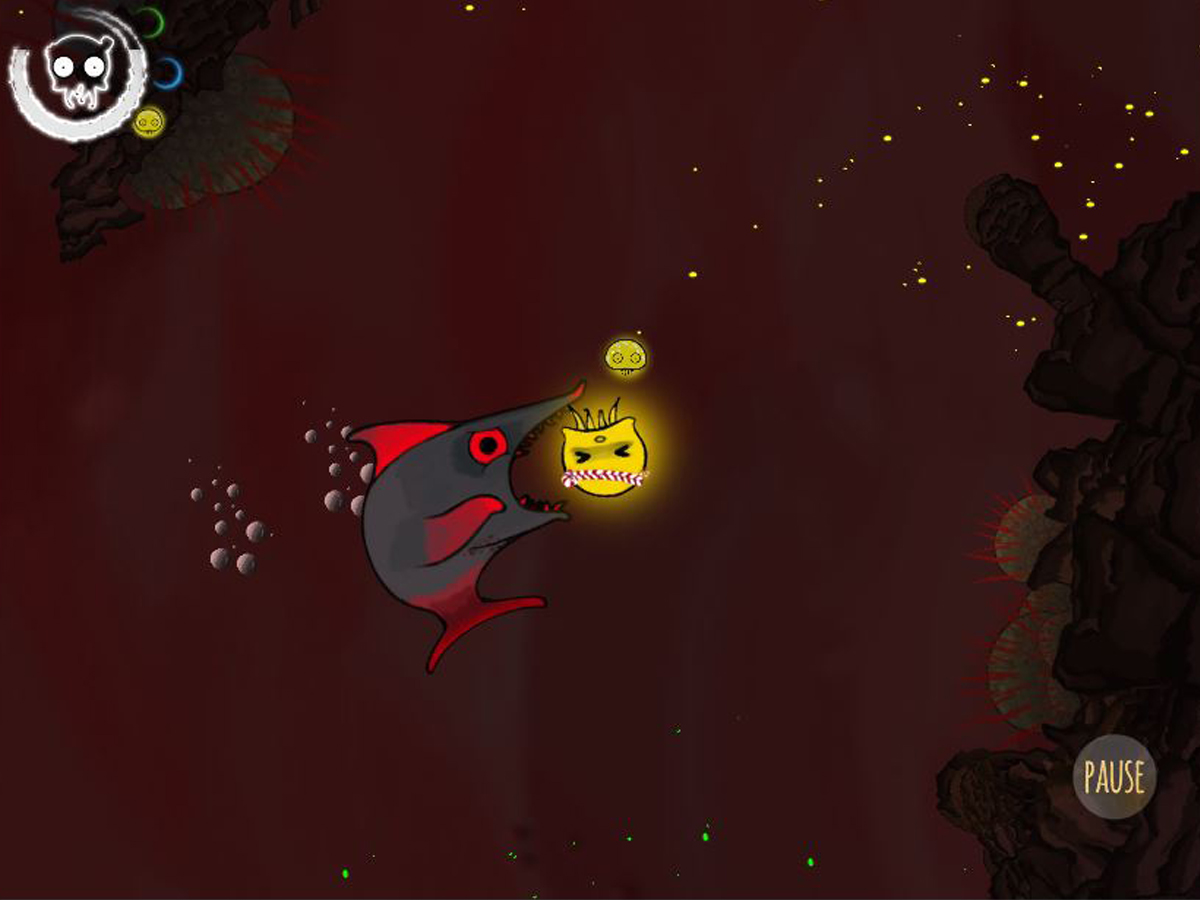
Designer
I was responsible for generating at least one level with strong gameplay flow and aesthetic appeal that fit within the parameters set for the game and implement any fixes for issues discovered during QA testing.
As an extra responsibility, whenever any level needed another pass in order to strengthen gameplay value, I had to evaluate what elements of the level required adjustment and implement those adjustments.
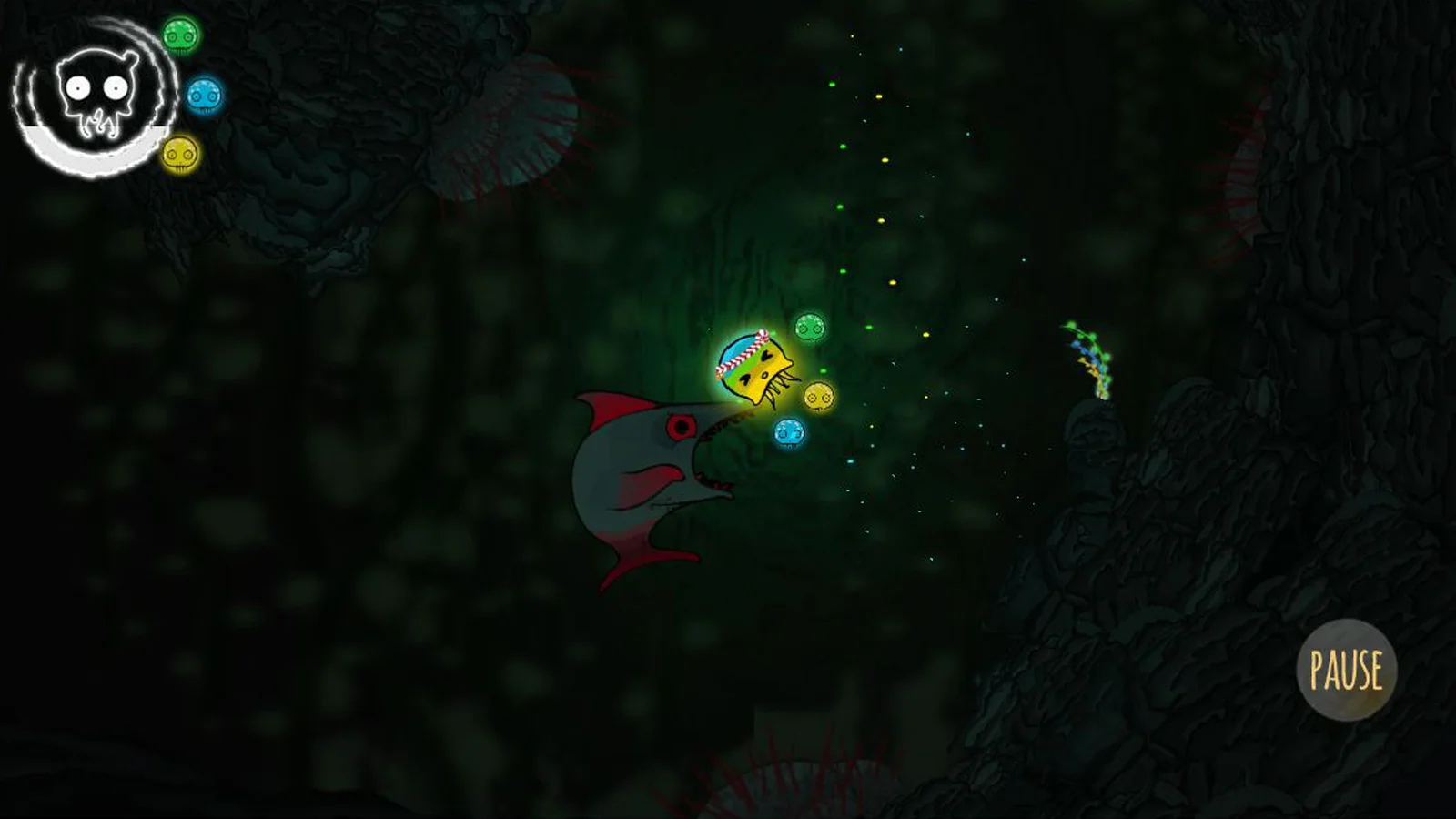
QA Tester
As our primary QA person, I had to find issues within our game that could have broken the game should a player encounter them and report them to the overall team and those responsible for fixing the issue.
My primary approach to QA was to first find the predicted way to play through a level and any variant-but-not-breaking way to proceed through the level. After establishing these, I would do just about everything that was either discouraged within the game or wouldn’t be expected, including but not limited to collision testing every single surface in the game and testing each enemy’s hitboxes from every conceivable angle.
Levels Worked On
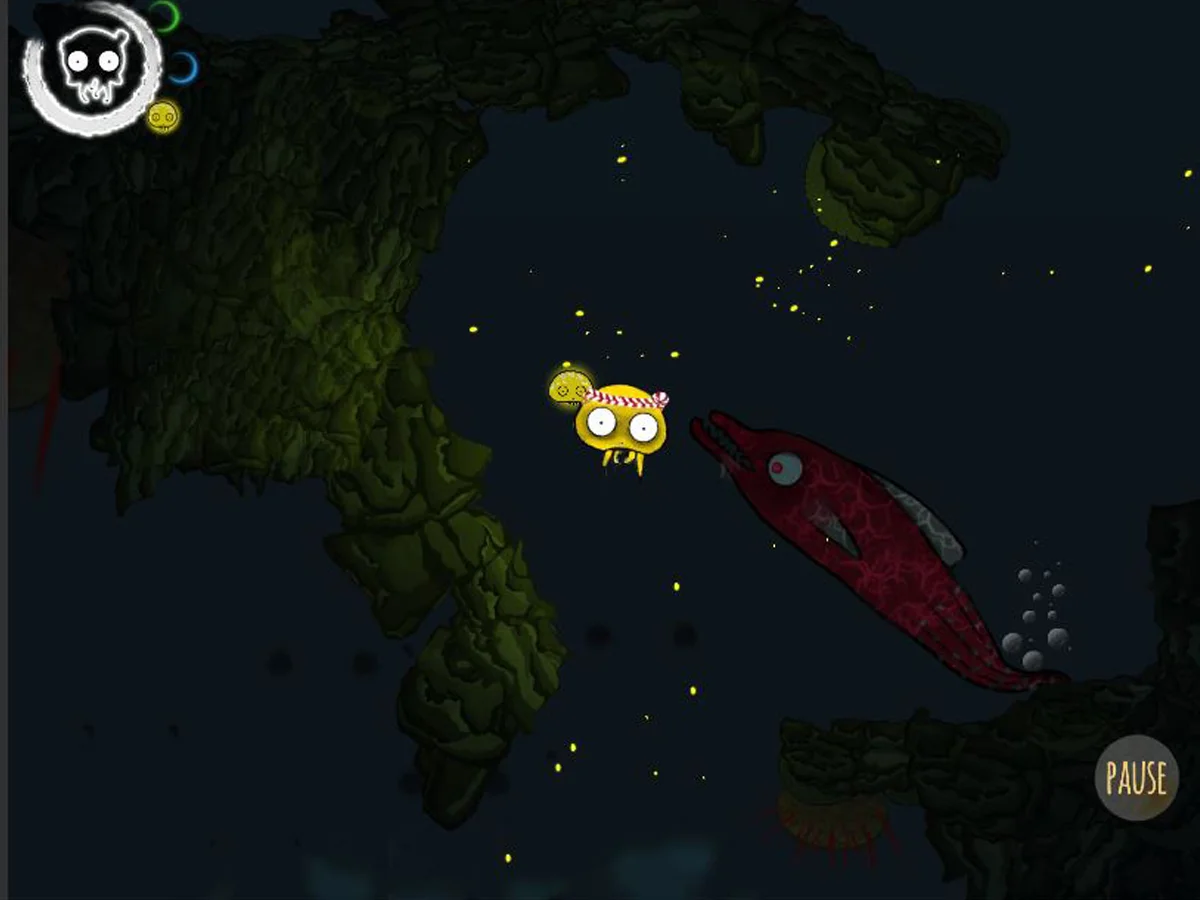
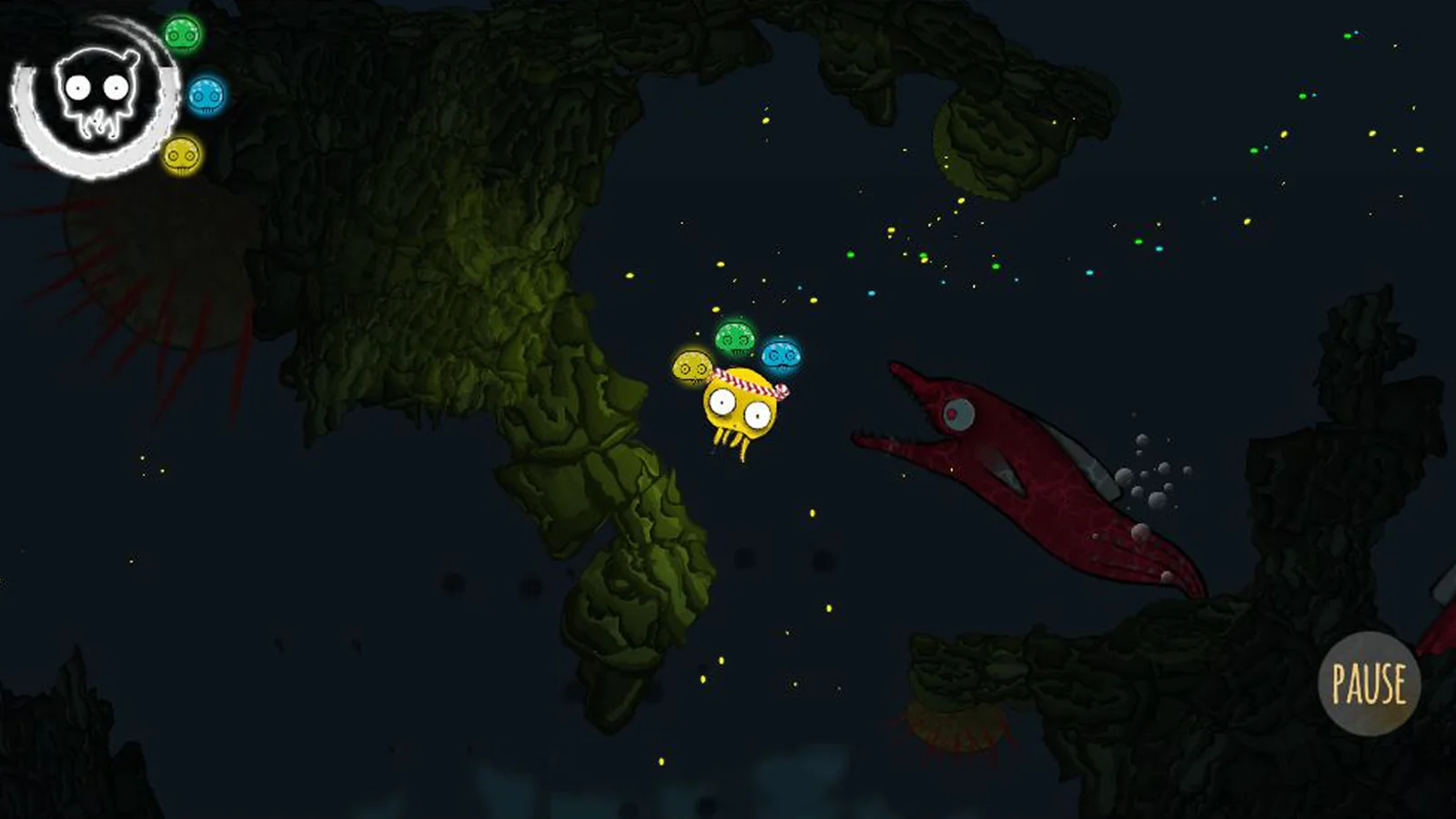
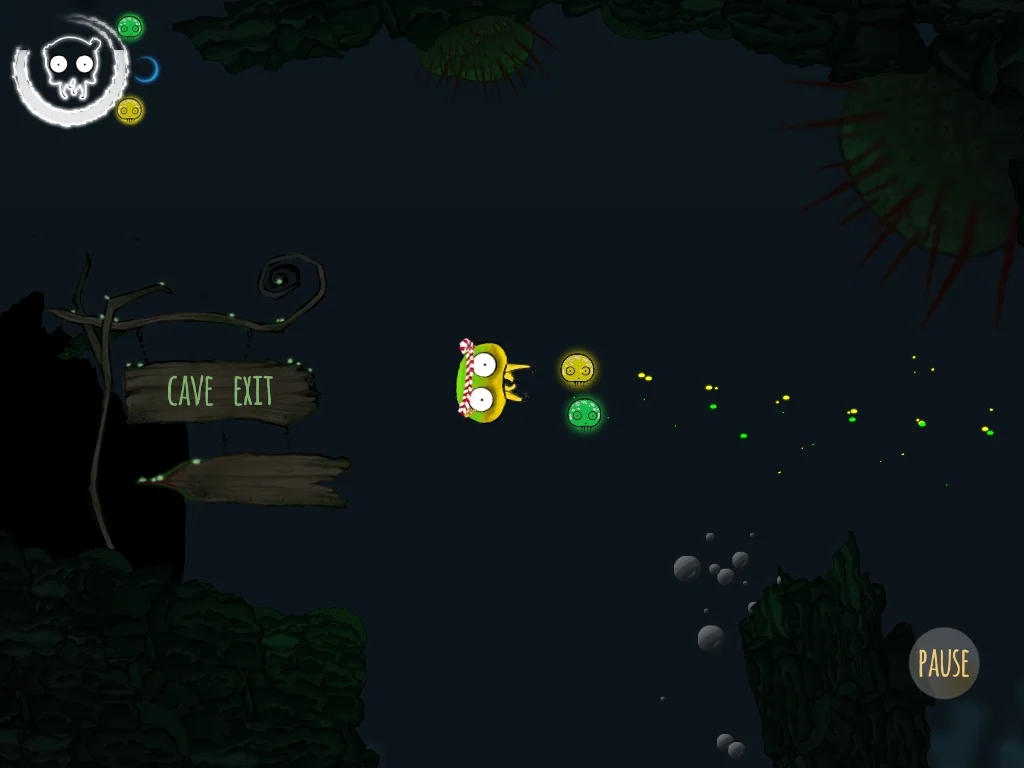
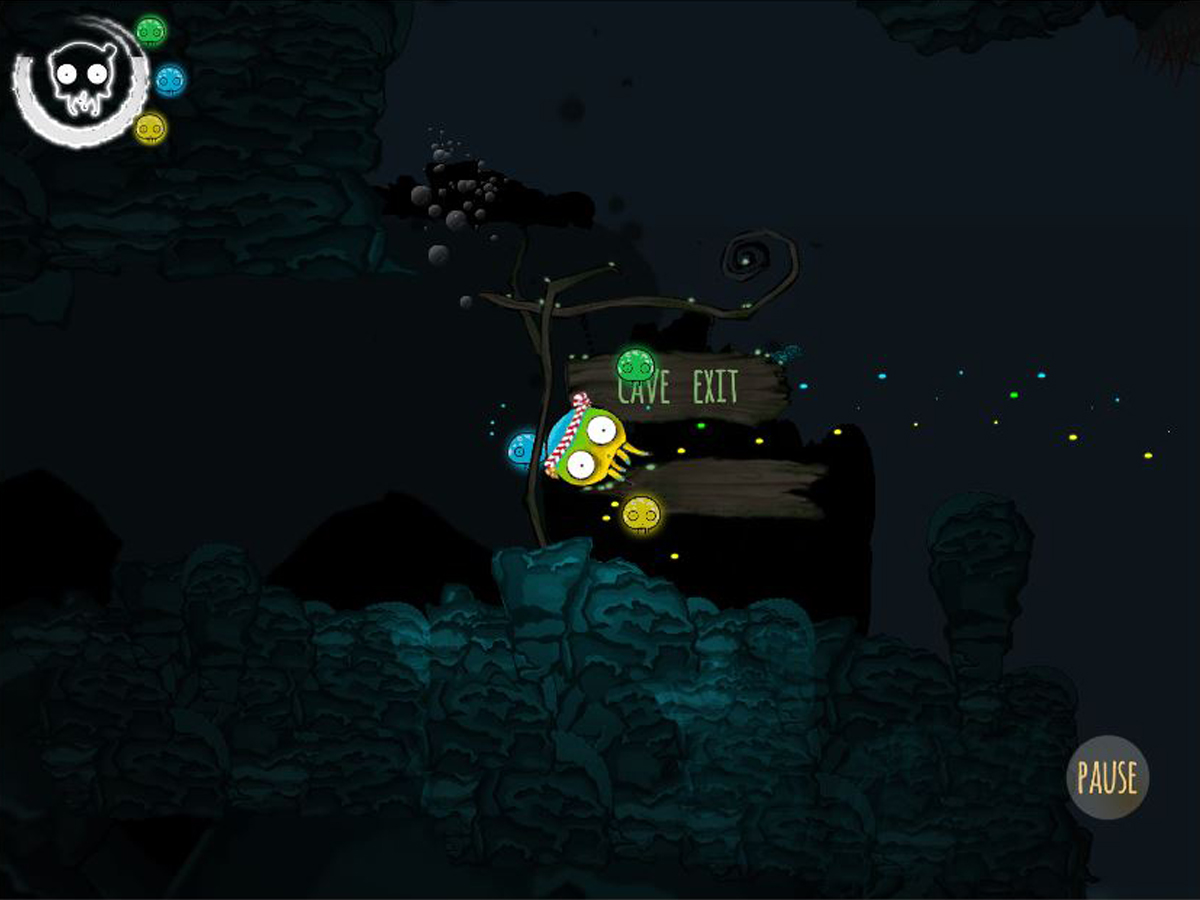
The Kelp Forest
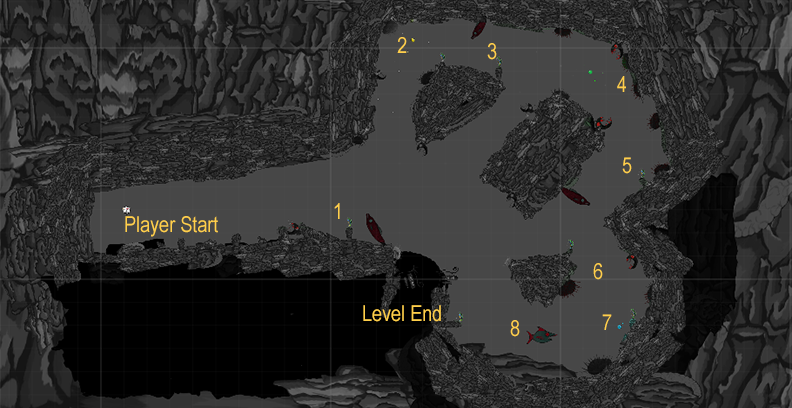
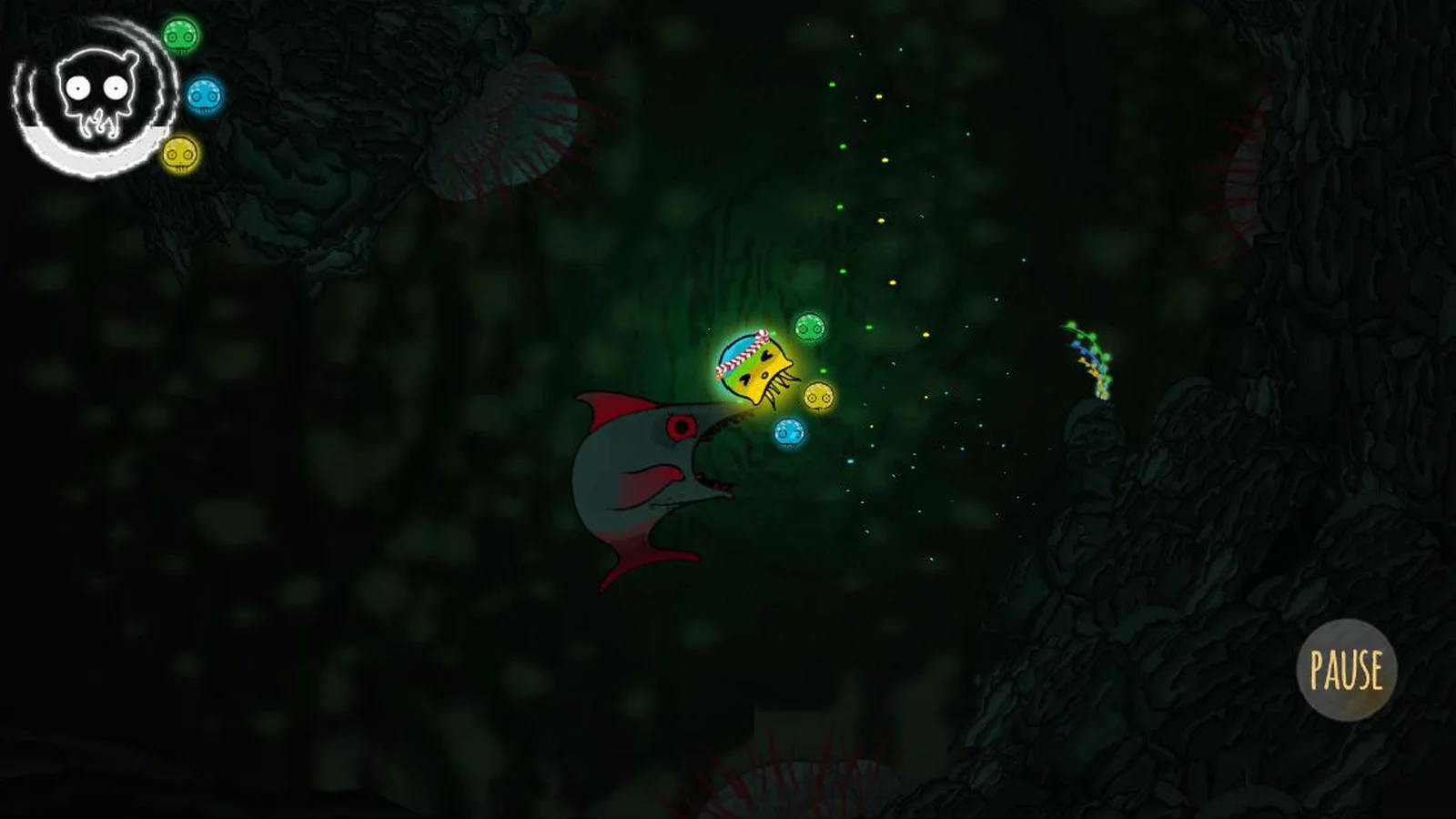
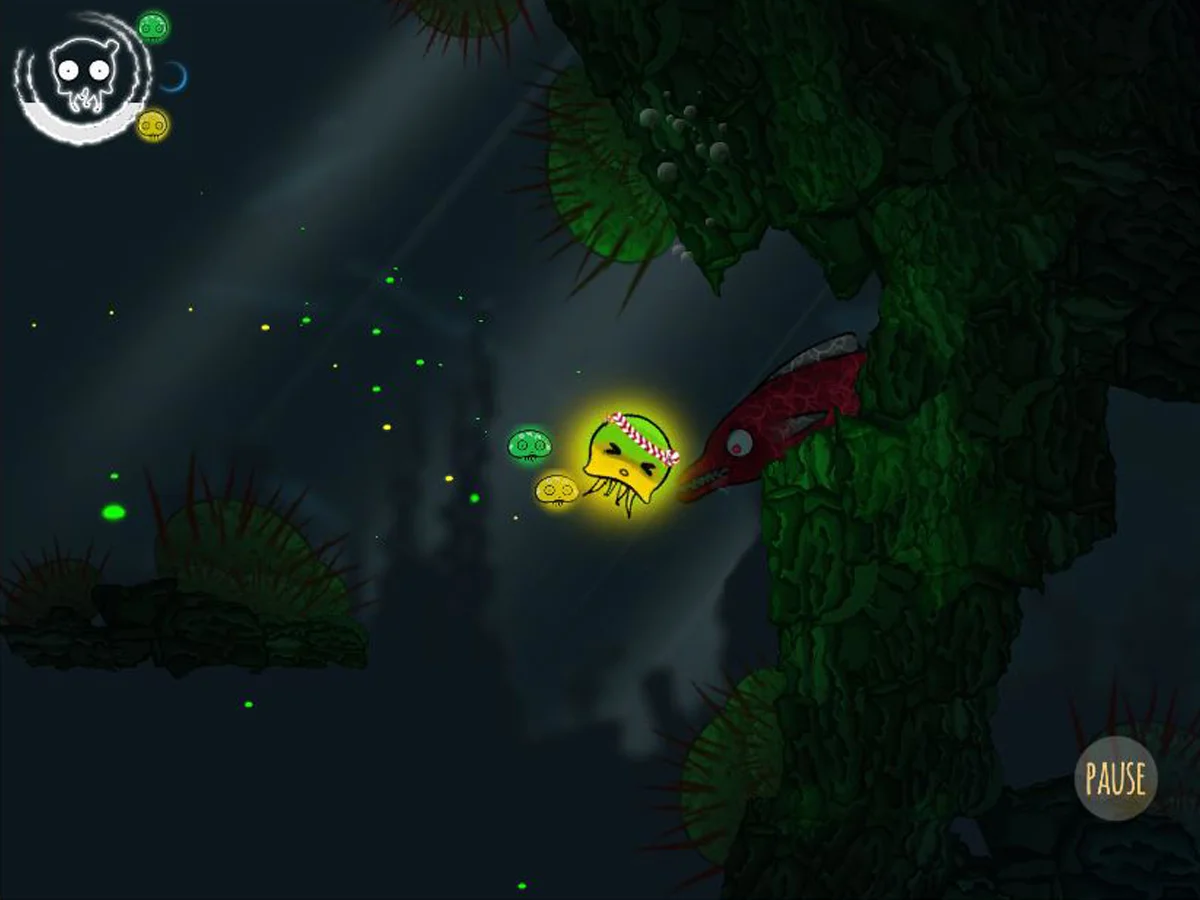
The core theme of this level is circular movement areas, so the optimal path and smaller paths within it are circular. This design encourages exploration and easy flow through the level.
Three large rocks in the middle of the level create circular movement areas that the player can flow between. There are no dead ends and the player is always able to see at least two possible paths.
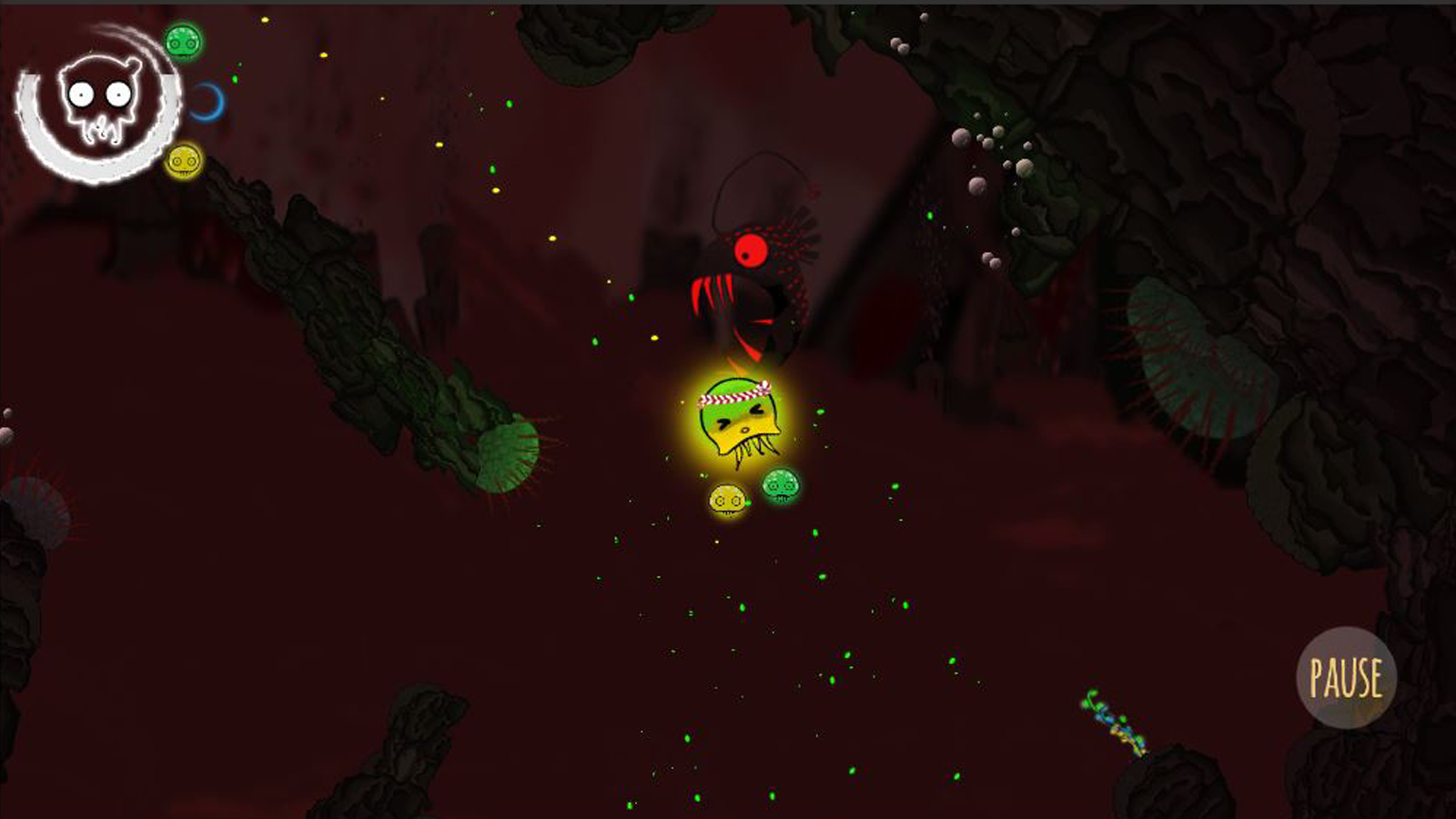
Great care was taken to place all enemy/hazard types, but the primary hazard type is Mr. Molars, the angler fish.
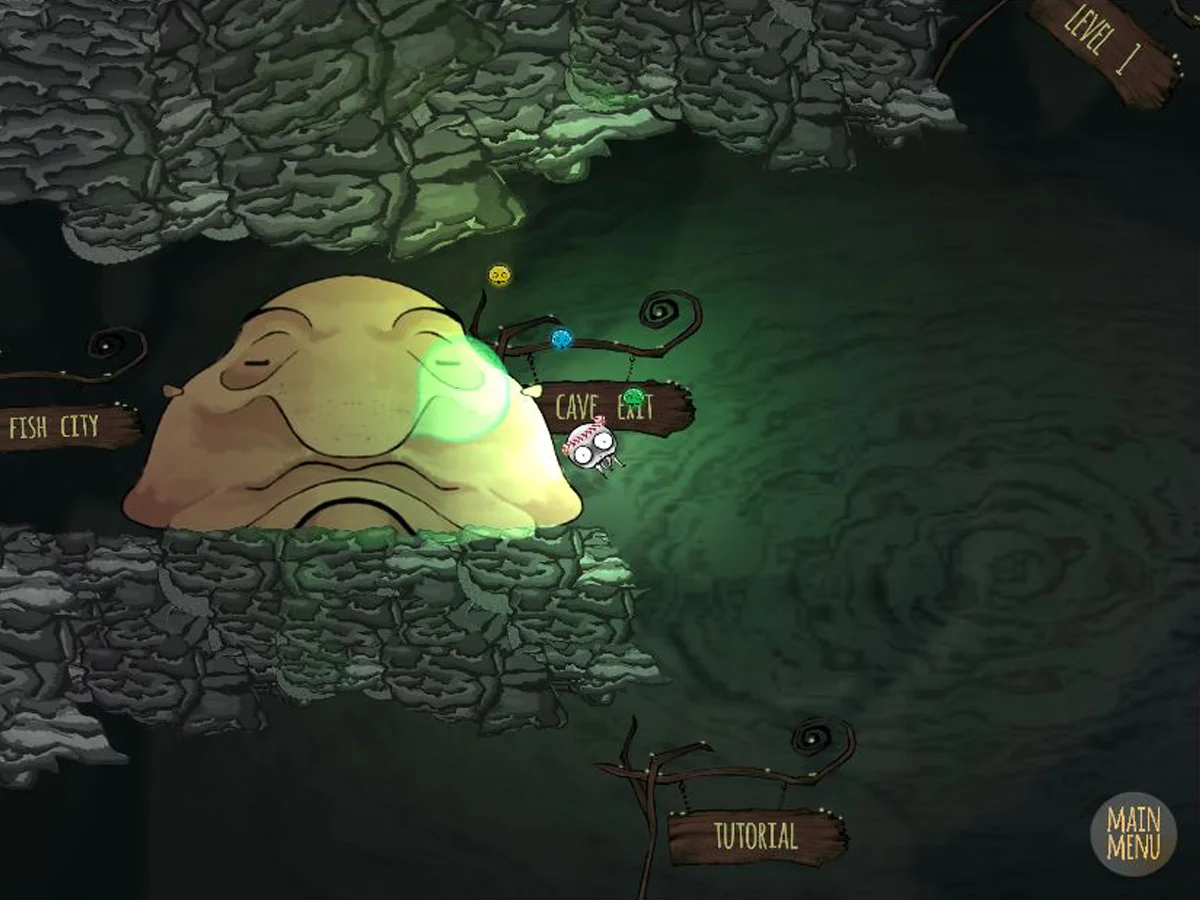
A kelp forest was chosen as the aesthetic theme of the level to add drama and depth to the scene. Players exit the uppermost tunnel in the central chamber to access this level, making it logically the “shallowest”. Kelp forests are found in shallow areas of the ocean, which is another reason this aesthetic was chosen.
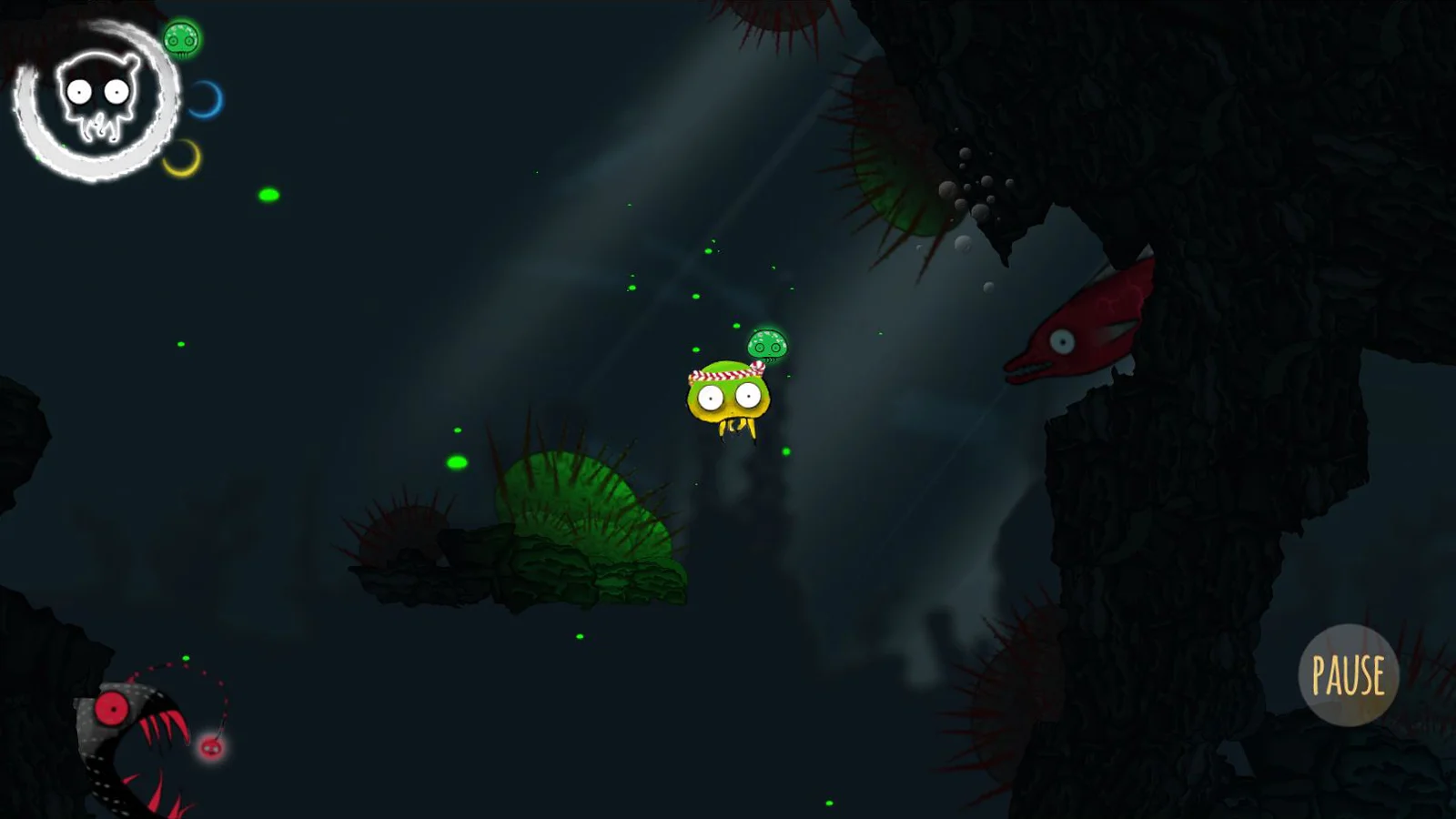
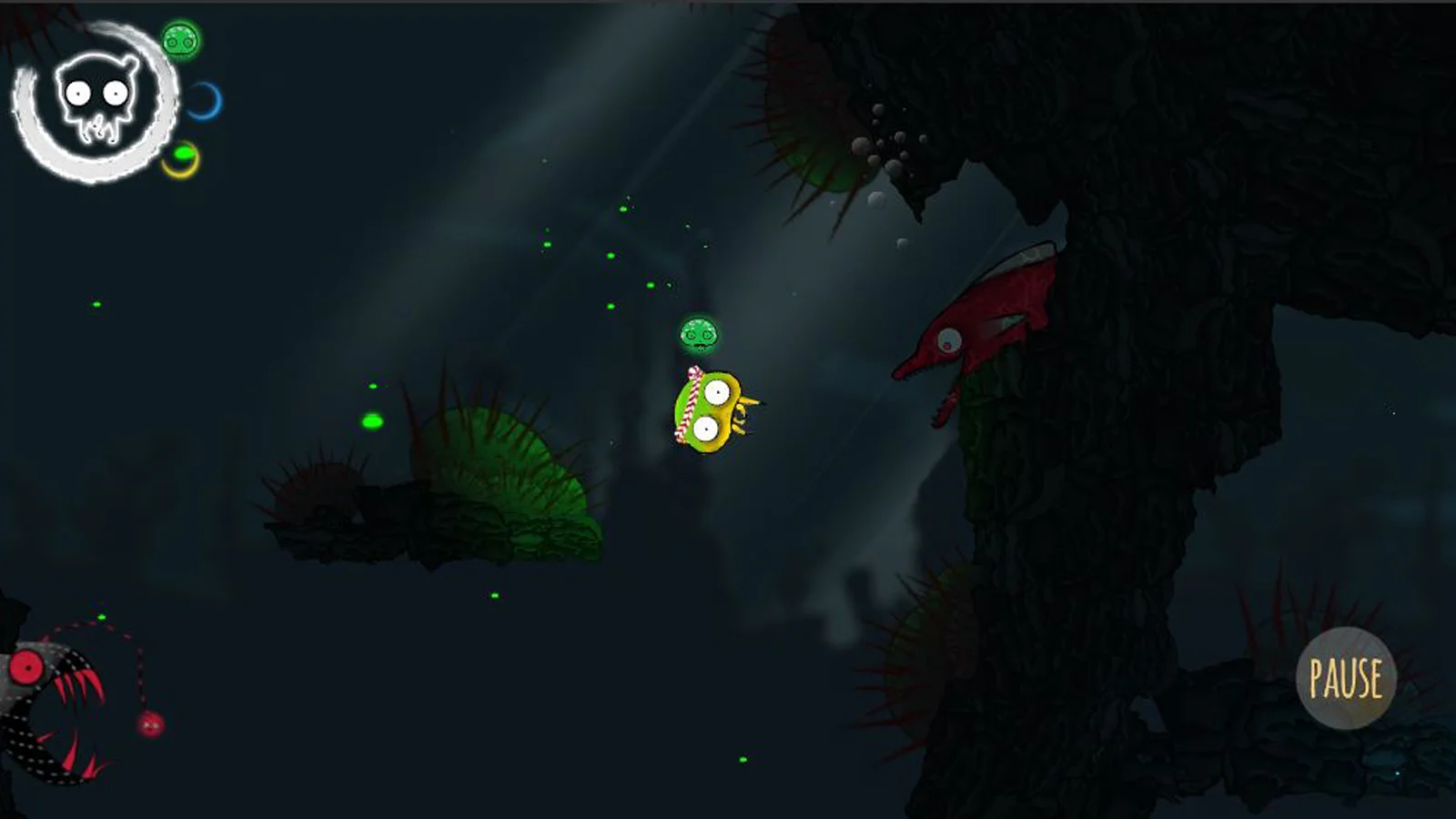
The Volcanic Waste
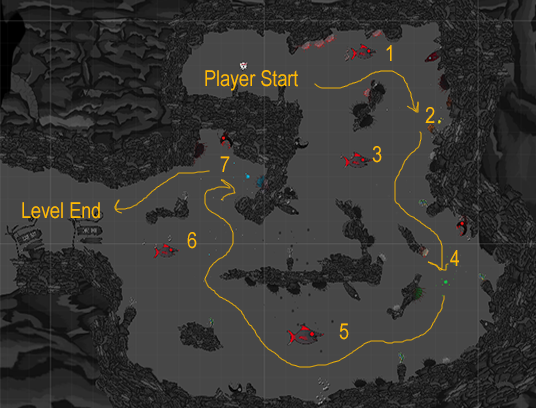
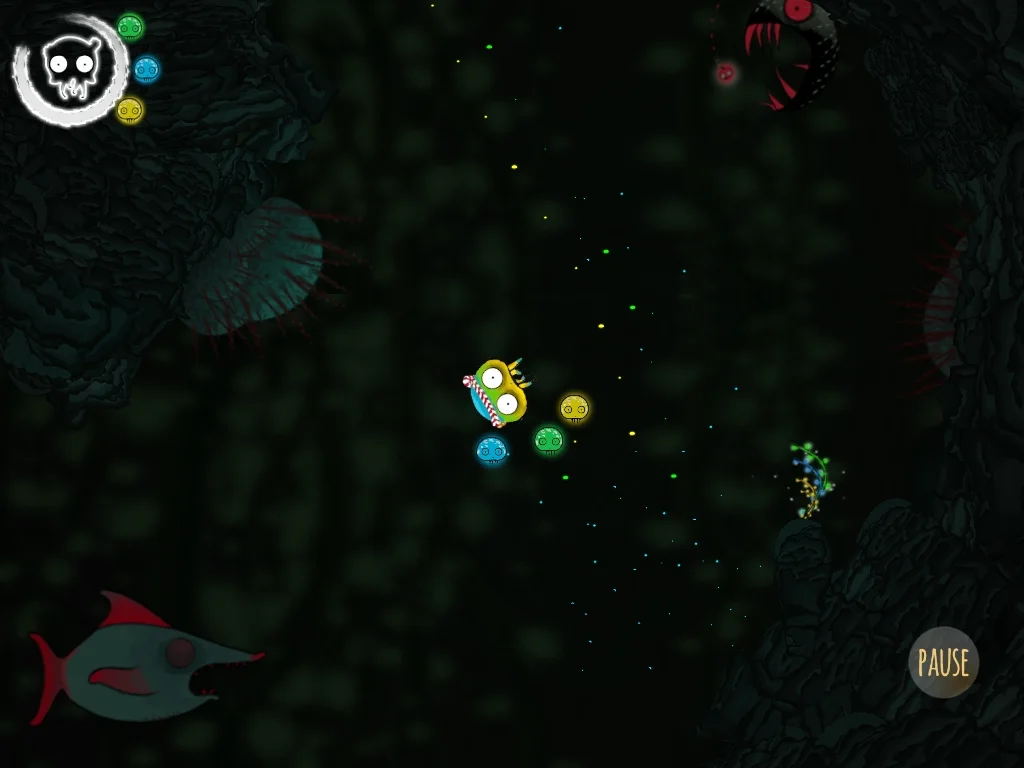
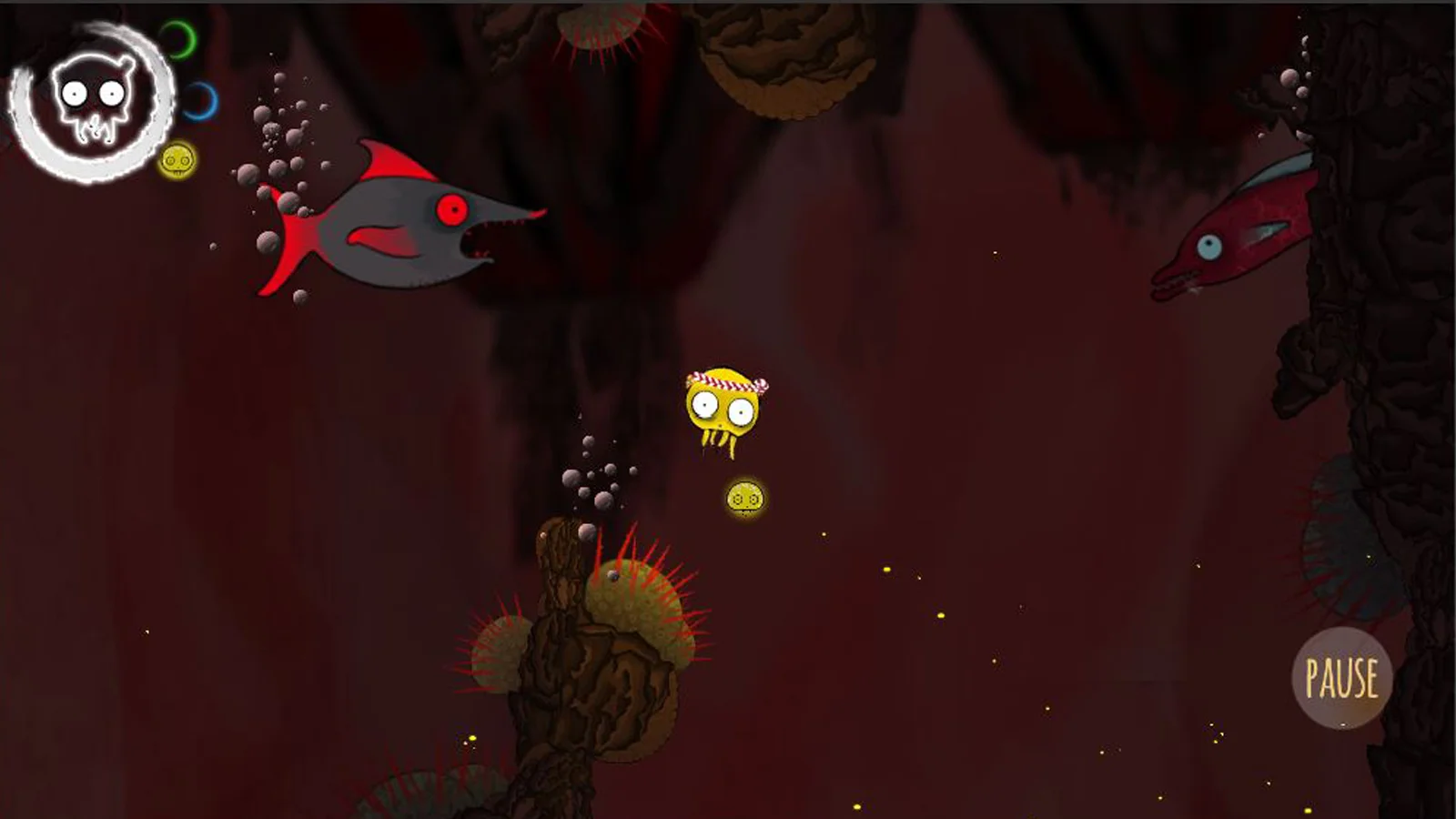
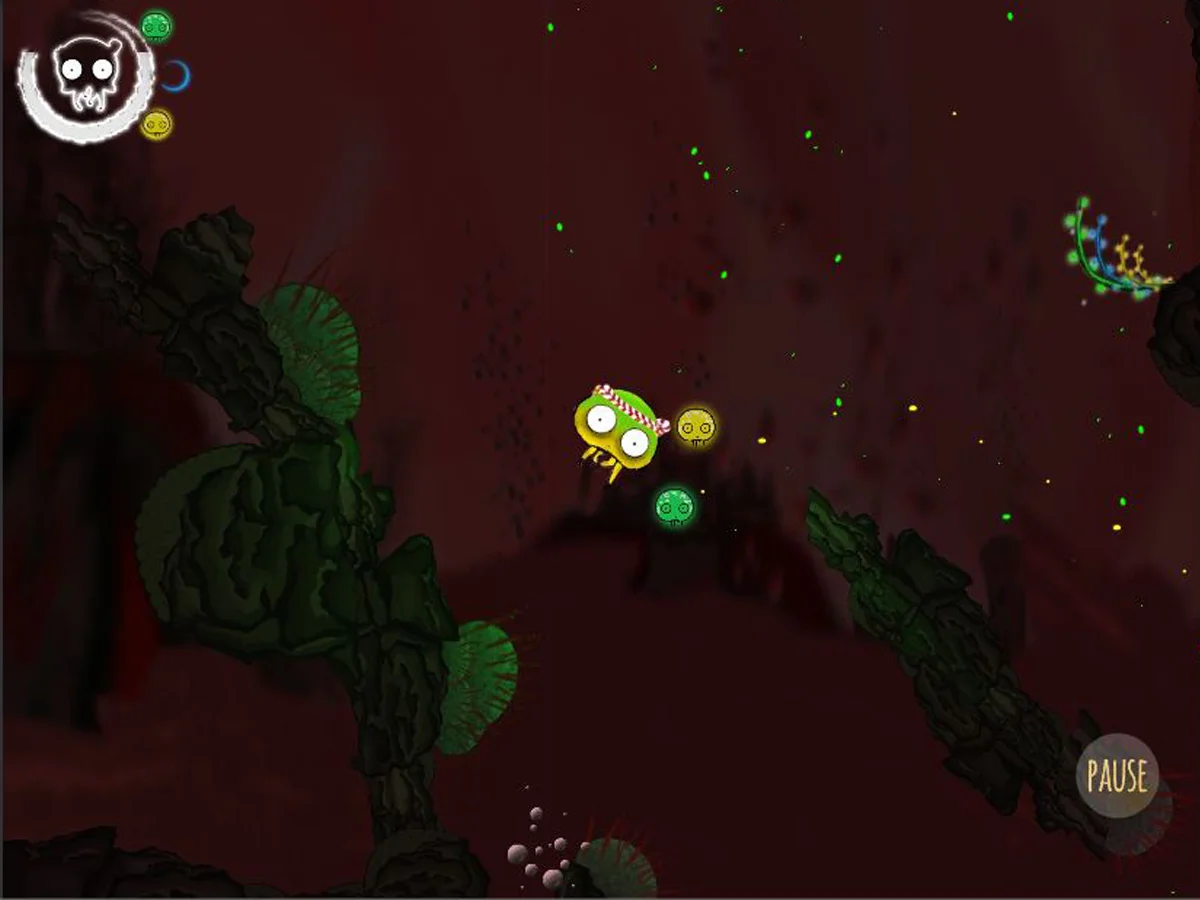
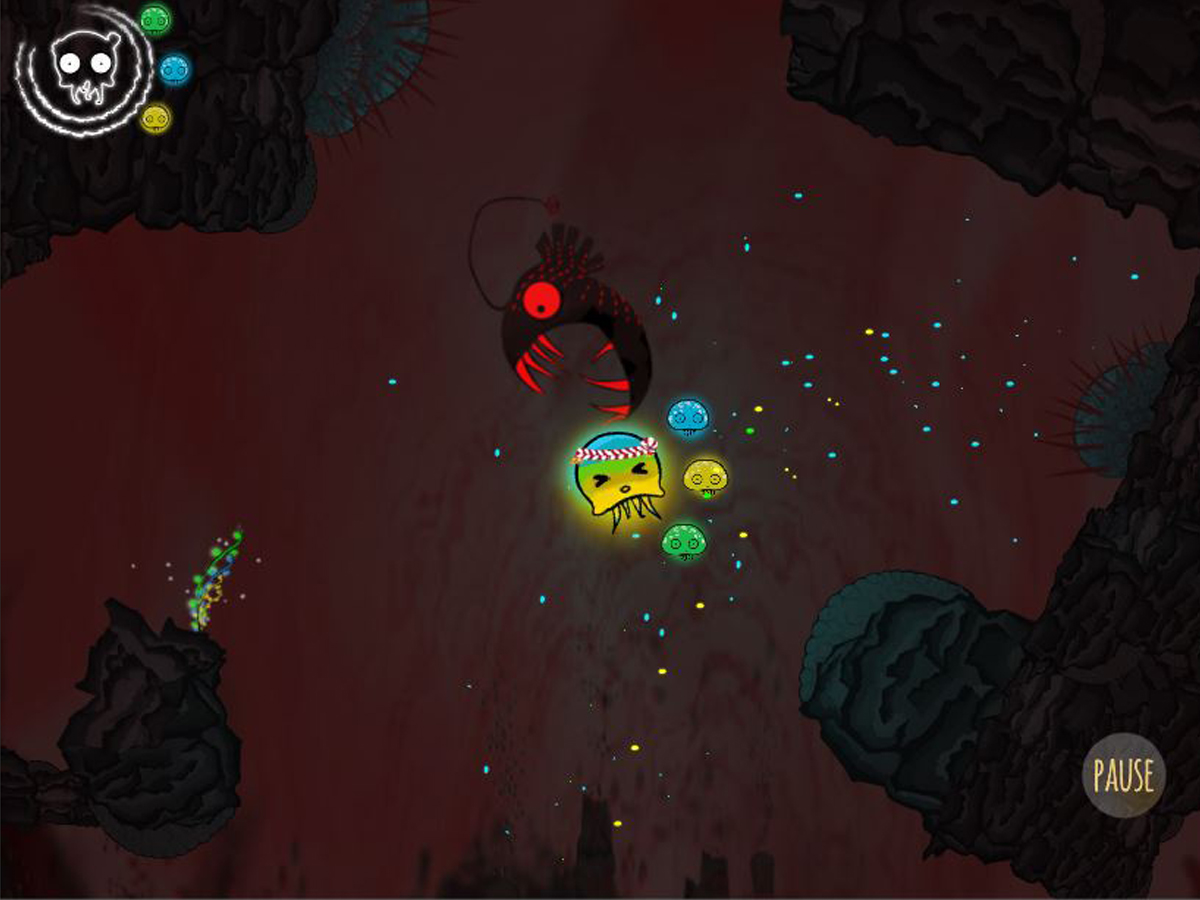
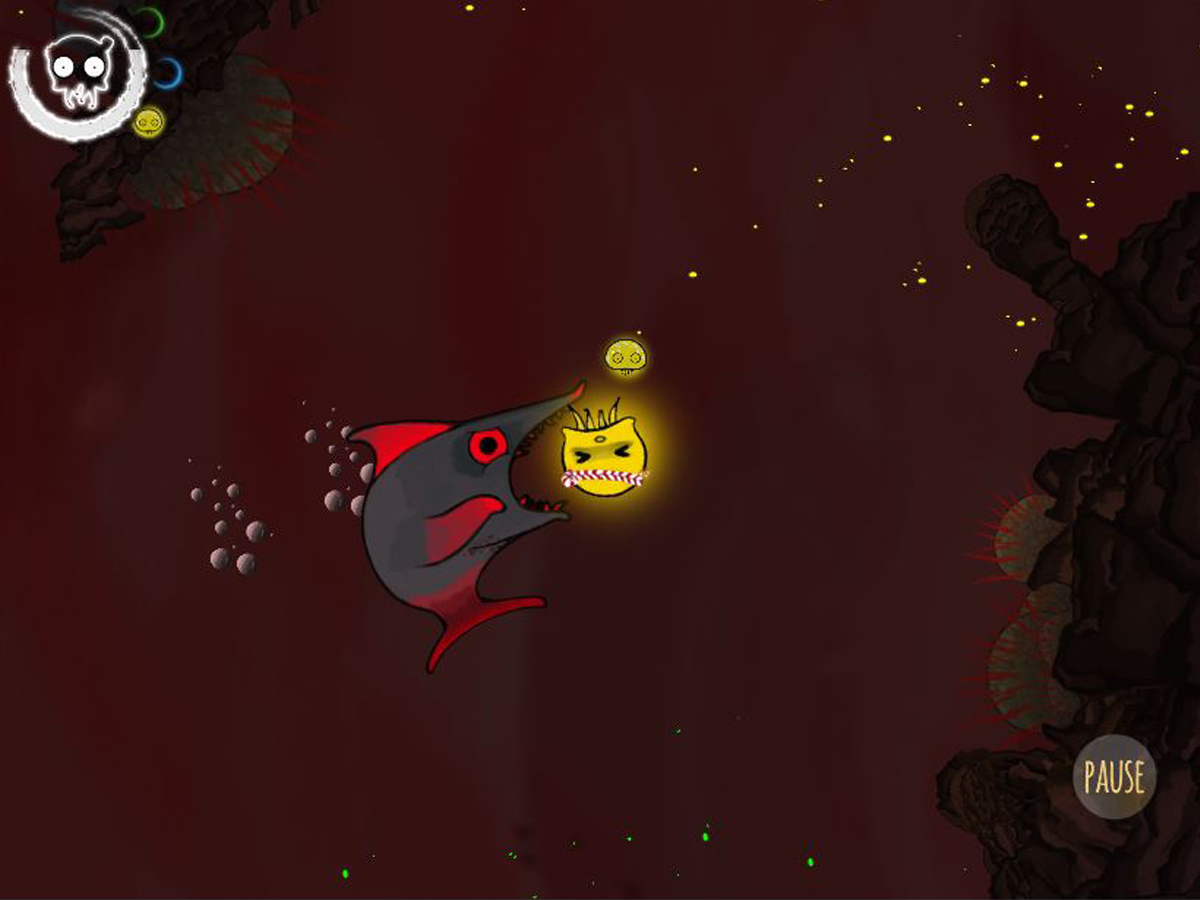
The Volcanic Waste is the most challenging level, mainly due to the prevalence of sharks, verticality, and more open water than other levels.
Each patrolling shark has a different speed and radius of vision, so players can never be sure when they’re out of view.
Players must make use of the zoom and pan mechanic to easily navigate through this level.
Health pickups are scarce, and spikes cover nearly all the walls. Ideas from both Level 1 and Level 2 are incorporated in Level 3, and its geography mixes narrow linear passages with circular flow.
The volcanic aesthetic makes for a dramatic and foreboding atmosphere.
The eerie music and large expanses of empty water help make this level feel enormous and frightening.
The initial version of The Volcanic Waste was designed by Aspen Clark. Upon receiving feedback from playtesters and stakeholders, it was determined that the initial version was much too difficult for players. In light of this, Aspen handed the level to me in order to simplify and adjust the flow of the level.
Changes made:
The initial level was about 1.3 times the height of the finished level.
Flows were adjusted in order to prevent conflict between the level’s layout and player tendencies.
Enemies emphasized with placement and pathing through the level.
Postmortem
Personal
What went well
My integration into the team went a lot smoother than I ever thought it could.
Because of the speed of the integration, I was able to jump into designing and constructing up to par levels quickly.
Through working on this team, I gained a confidence in my abilities that I thought would take a lot longer to actually acquire.
What went wrong
There were varying levels of communication and understanding, which meant that it sometimes took me a few minutes into a task before someone either corrected me or I reevaluated what I was doing and realized I was doing things either wrong or inefficiently.
Even though my integration went smoothly, because of how late it was, I wasn’t able to be the absolute most efficient during my first week.
I felt like my time wasn’t exactly utilized the best. I could have definitely constructed at least one more level.
What was learned
I definitely gained a much better understanding of Unity and how it works while in this team.
I learned that communication issues happen everywhere, but in multiple different ways. My first team failed because of communication issues, and while they were better on this new team and handled better, they still popped up.
The biggest, most obvious thing I learned within this team was how to work with another level designer efficiently.
Team
What went well
The team’s adaptability was great. A new team member being added to the team did very little to slow the team down.
Focus within the team was great. Everyone worked efficiently on their tasks and communicated what they needed when they needed to.
The work environment was pleasant, which lead to high drive to do great work.
What went wrong
When a big mistake happened that led to multiple things breaking, the involved person(s) often got worked up about the issue for an extended time period before actually working to fix the issue.
Time management wasn’t always the best. While a lot of solid work was completed early on, as time progressed, there was a lot of “well, I just finished….everything. What do I do now?” that happened.
Communication could get rather confusing at times, which led to some early confusion by the new team member and reduced efficiency.
What was learned
The entire team learned efficiency practices that applied for their specific specialization.
With two of the three specializations, specialization specific teamwork practices were developed and utilized.
Obviously, the entire team got a clearer insight into how games are made and established better practices for creating a game than they had when the semester started.